

Waste-Heat Driven Dehumidifier
Waste-Heat Driven Dehumidifier
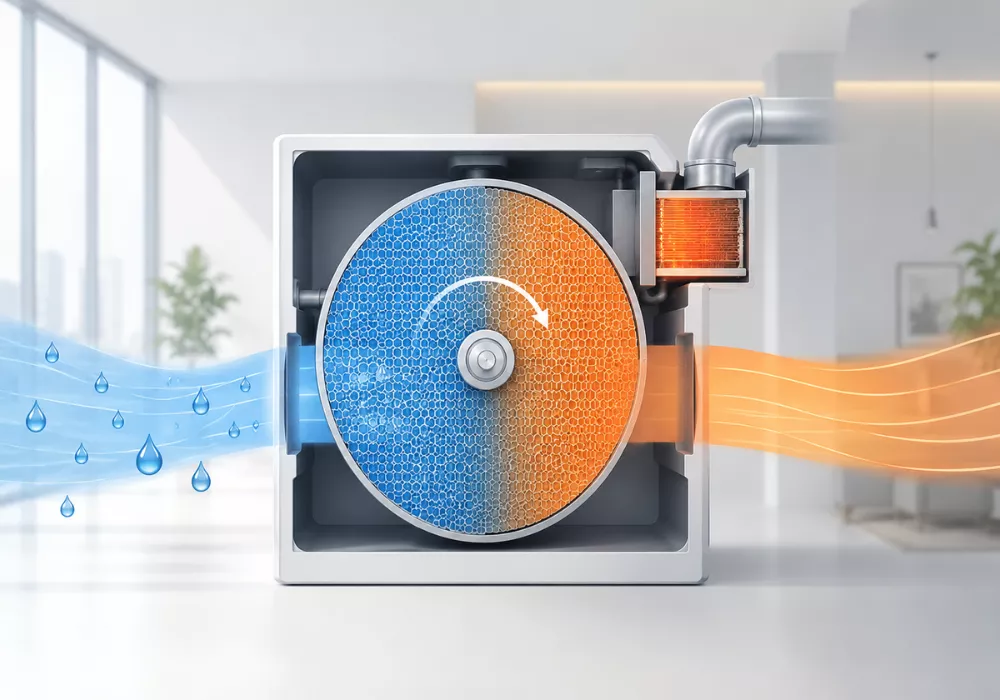
Humidity is not just uncomfortable — it is also a great energy burden on our campus buildings. This project explores an innovative way to dry indoor air by reusing low-grade waste heat from campus HVAC systems. At the centre of the system is a rotating hydrogel wheel that absorbs moisture from humid air, then uses warm waste air to dry itself and continue the cycle. The goal is to improve indoor comfort while reducing electricity demand.

Why does humidity matter on campus?
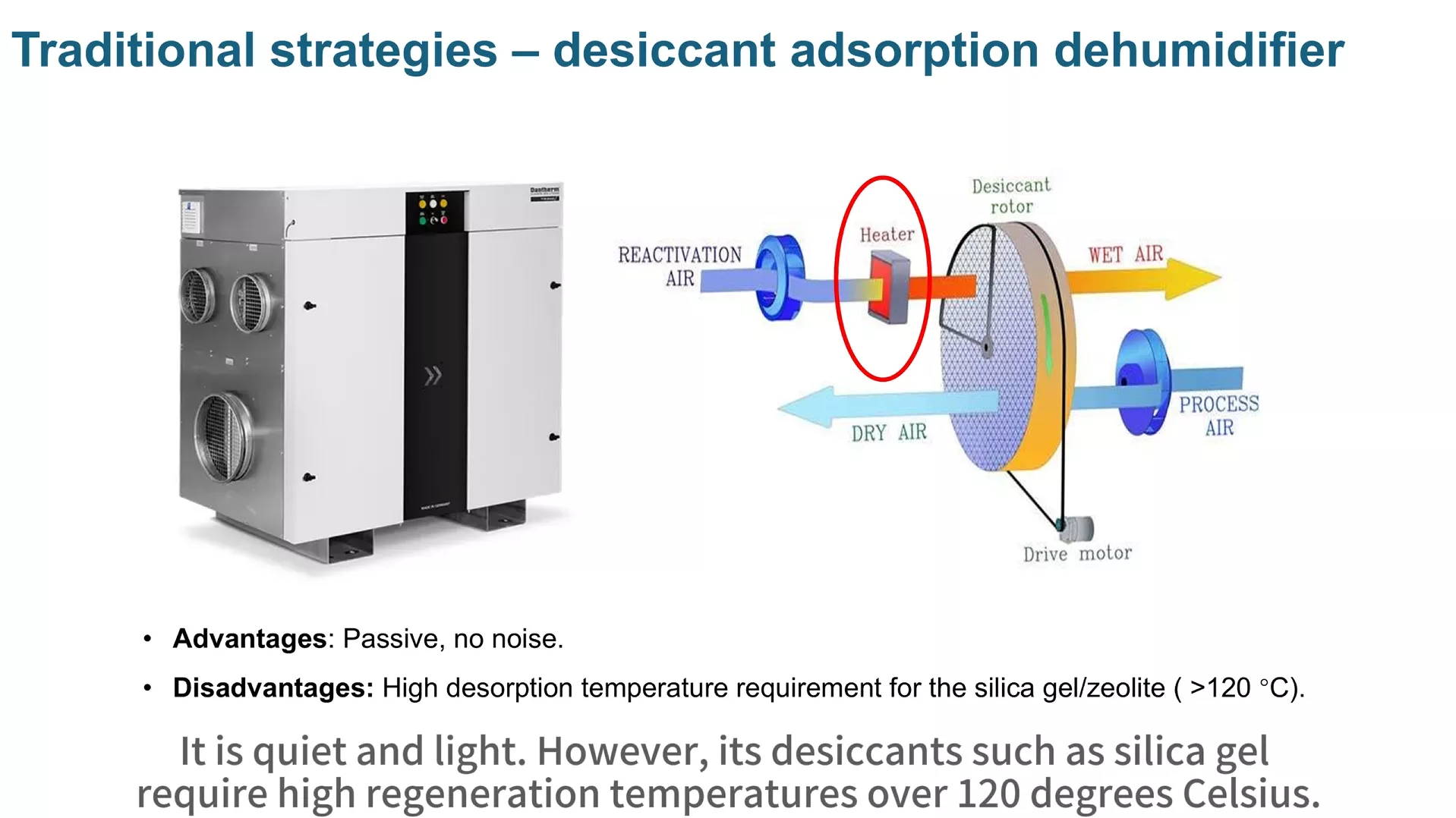
Humidity control is one of the less visible but important energy demands in Hong Kong buildings. To keep indoor spaces comfortable, conventional air-conditioning systems often remove moisture by cooling air until water vapour condenses and then reheating the air to a suitable temperature. This works, but it can use a lot of electricity.
At the same time, campus HVAC systems release low-grade waste heat that is always ignored. This project connects these two issues: instead of letting that heat go to waste, it converts the waste heat into an energy source that helps explores whether the heat can help drive dehumidification.
A reliable humidity control mechanism is critical for HKUST as classrooms, offices, laboratories, and other indoor spaces are heavily affected by humidity throughout much of the year. A more efficient dehumidification approach could support providing a comfortable environment to stakeholders while reducing the energy burden of building operations.
How does it work?
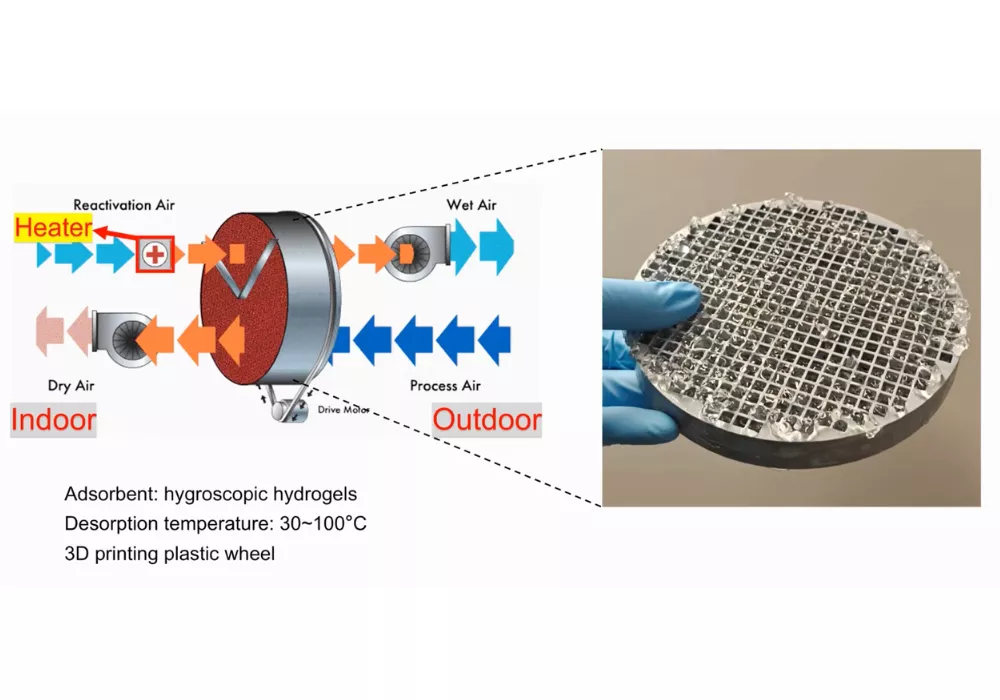
This project introduces a highly efficient dehumidification system designed to cut campus energy costs. Traditional systems rely on heavy electricity useage to cool and reheat the air to remove moisture. Instead, this system uses a specialized, 3D-printed hydrogel wheel that absorbs moisture from the air like a high-performance sponge.
To continuously dry the air, the wheel rotates into a recovery zone where it is dried out using low-grade waste heat captured directly from the university's existing air conditioning (HVAC) systems. By recycling this free waste heat, the system operates with near-zero additional energy, lowering electricity bills and carbon emissions.
What will we test through this Living Lab?
HKUST will serve as a real-world testing ground for this low-carbon building technology. The project will explore how advanced materials, waste heat recovery, and campus HVAC systems can work together in practice.
The prototype can also support student learning, research, and public engagement by showing how engineering innovation can turn wasted energy into a practical sustainability solution.